Preparing the Pig the Night Before
Getting the correct size pig is probably the most important step in having a successful pig roast. If you get a pig that is too small, then you wont be able to feed everyone in the group. A pig that is too large will increase cooking time and the chef will spend a lot longer pulling the meat off the bone. 3 lb's per person has worked for us in the past.
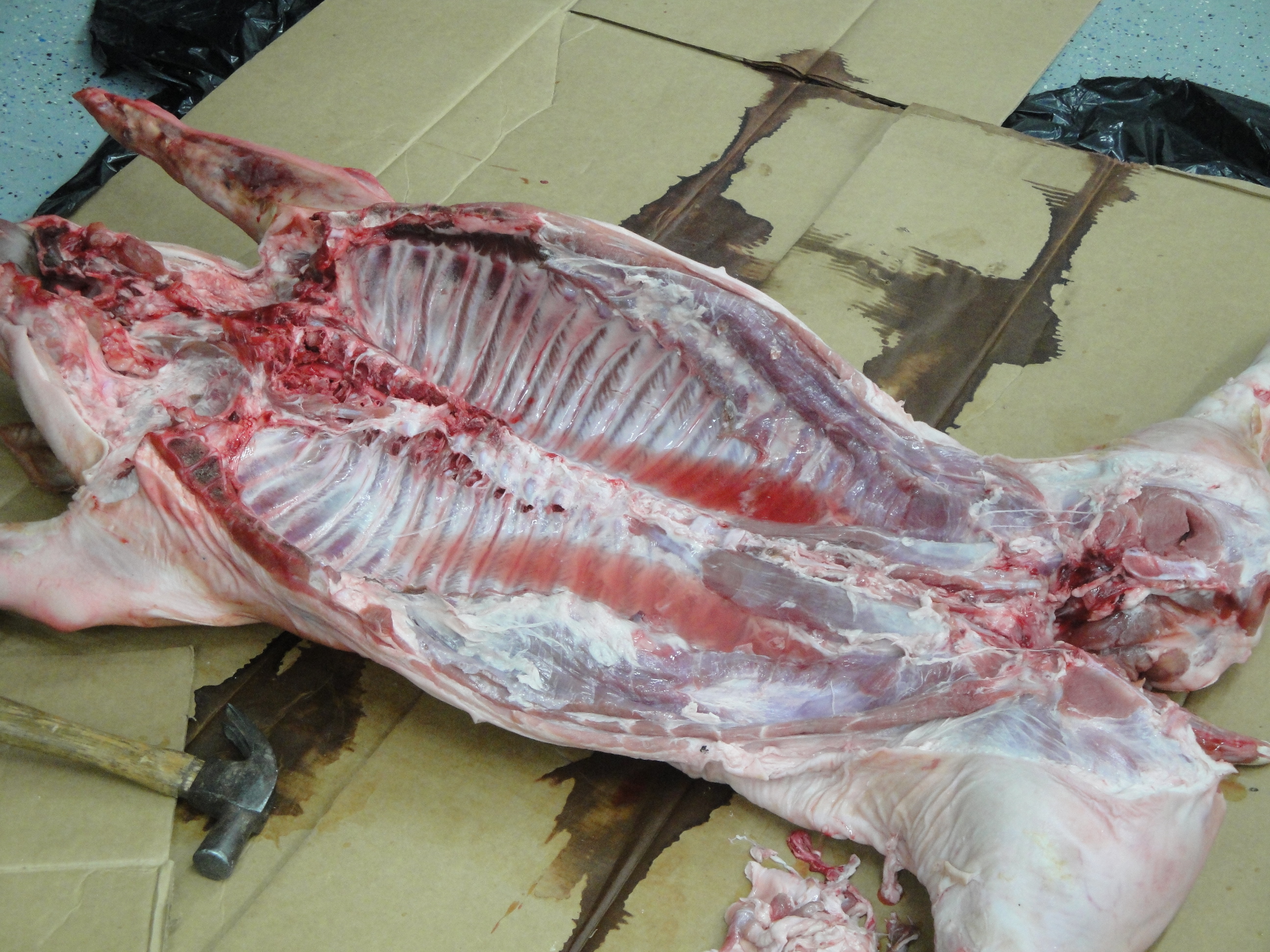
Once you have your pig, you need to get it ready for the fire. You do this by cracking the spine so that the pig lays flat. This can be done with a chisel, saw, ax, or any other sharp object. Make sure that when you crack the spine you do not cut through the skin. If you cut through the skin the pig will dry out and you will loose some of the juices that help flavor the pork during cooking.
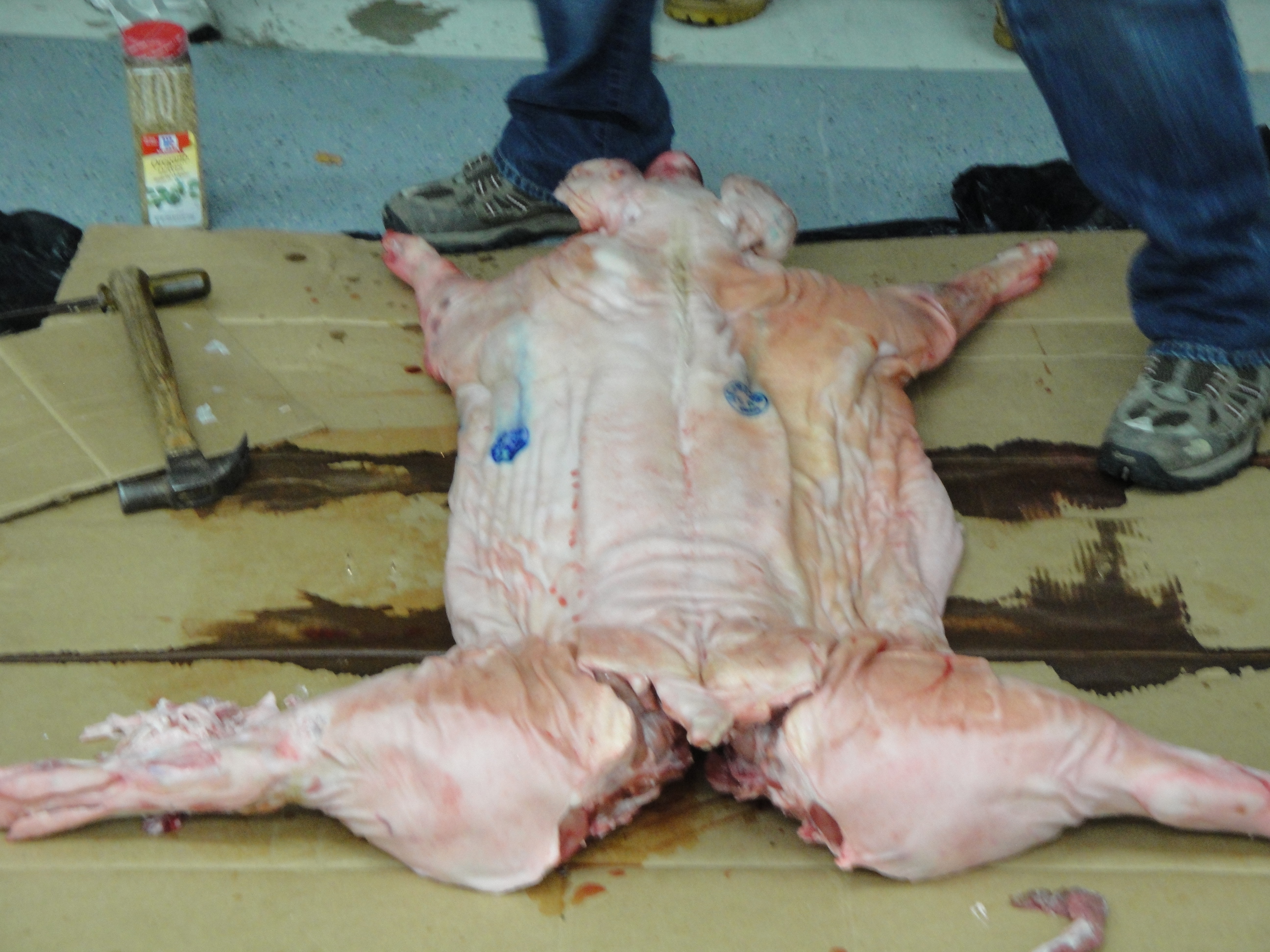
Now that you have the pig laying flat, you need to flip it over so that the skin side is up. Take a generous amount of salt and rub it all over the skin. This will allow the skin to have a nice flavor once the pig is cooked. People love eating the skin almost as much as the pork itself.
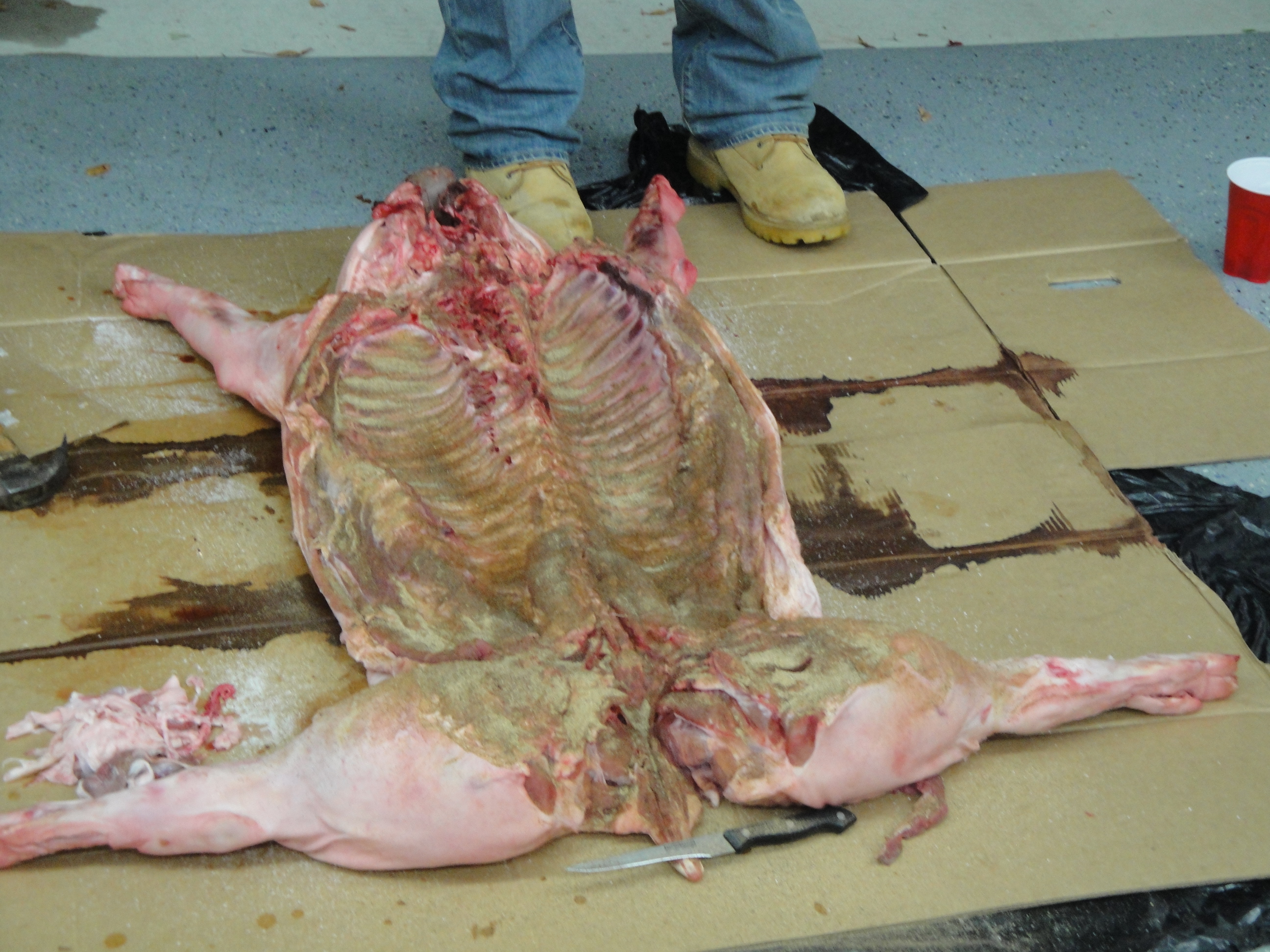
When you are done with salting the pig, you need to flip the pig back over so that the flesh is facing up. A rub is optional but when we began using a dry rub people noticed the added depth of flavor. Depending on your ingredients you may want to use rubber gloves during this step. You will need to apply your dry rub all over the meat. Make sure to rub this in and apply a lot of the rub because some of it will fall off during cooking.
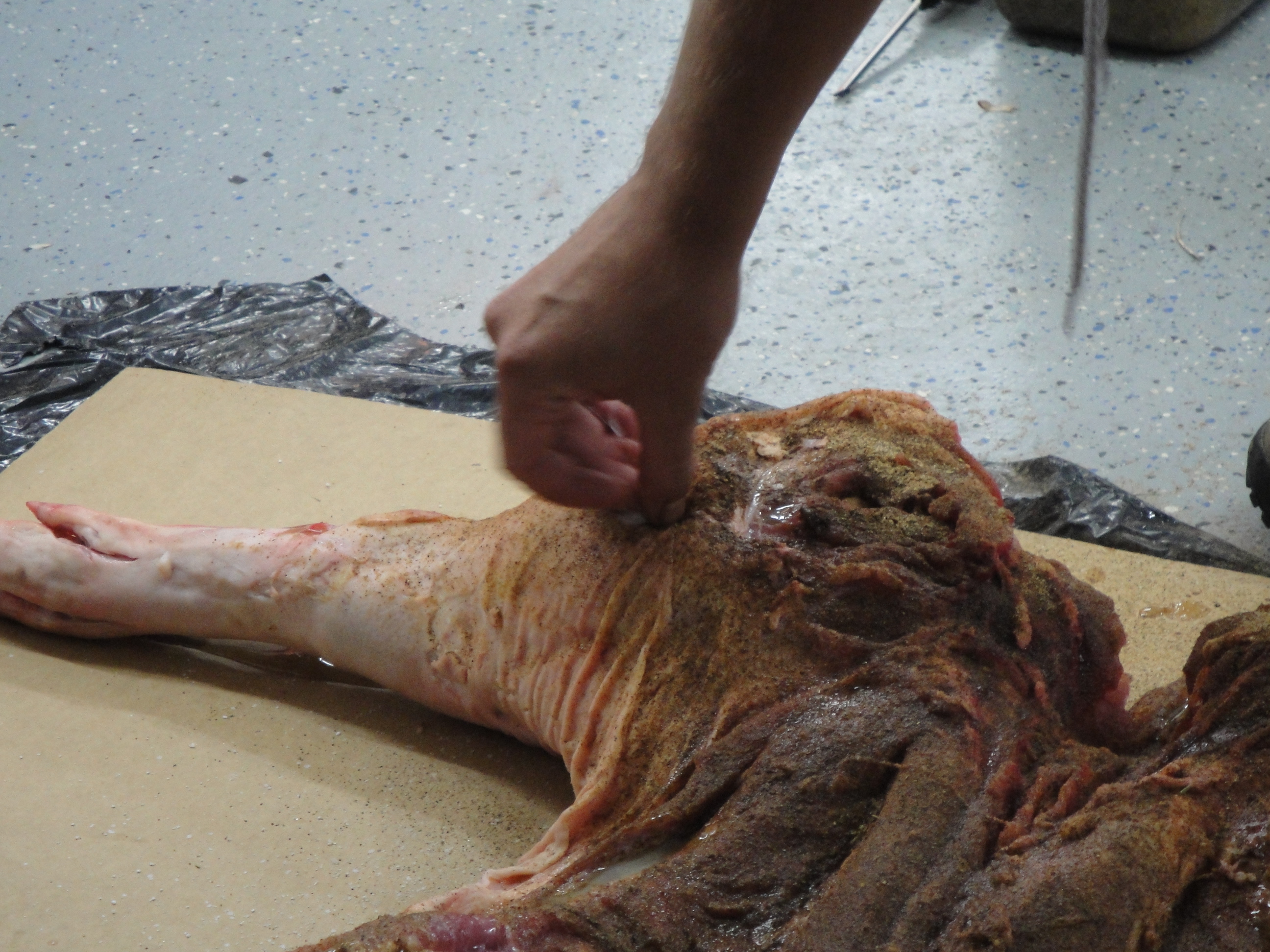
The next thing you need to do is add some garlic cloves to the pig. Take a sharp knife and cut slits into the pork. Push garlic cloves into the slits that you just created. Put these all over the pork, paying particular attention to the meatier sections of the pig. The oils from the garlic will give a lot of flavor to the pig as it is cooking.
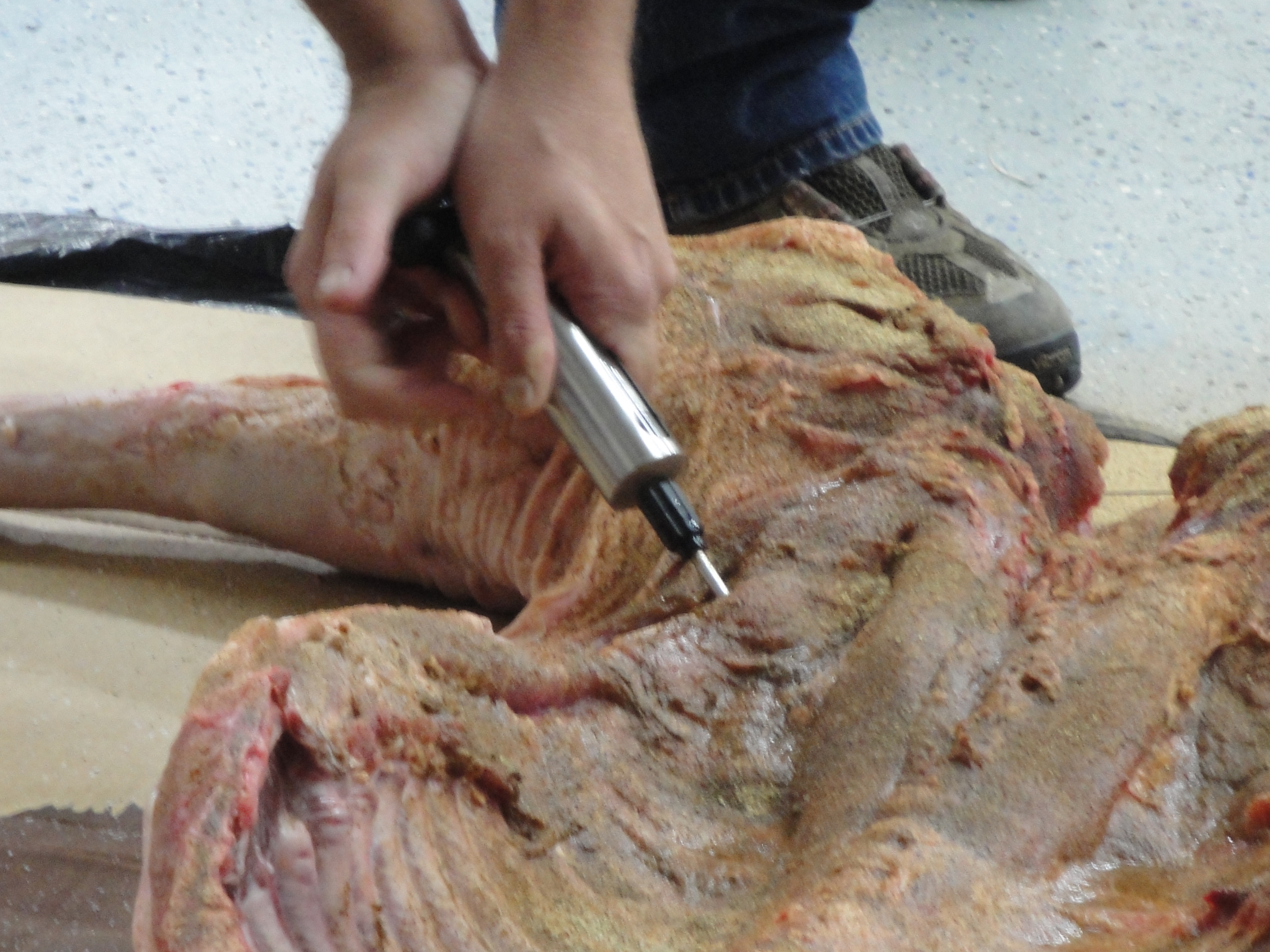
The last step you need to do the night before is inject the pig with marinade. We use a citris based marinade and it is delicious. We combine lemon juice, lime juice, orange juice, burbon, and some other seasonings in our marinade. Make sure to have a lot of marinade because you will be marinading the pig throughout the cooking process. It shouldn't be a thick marinade but a flavor injector is necessary for this process.
Once this is complete, cover the pig with ice and let it sit overnight.
The Day Of the Pigroast
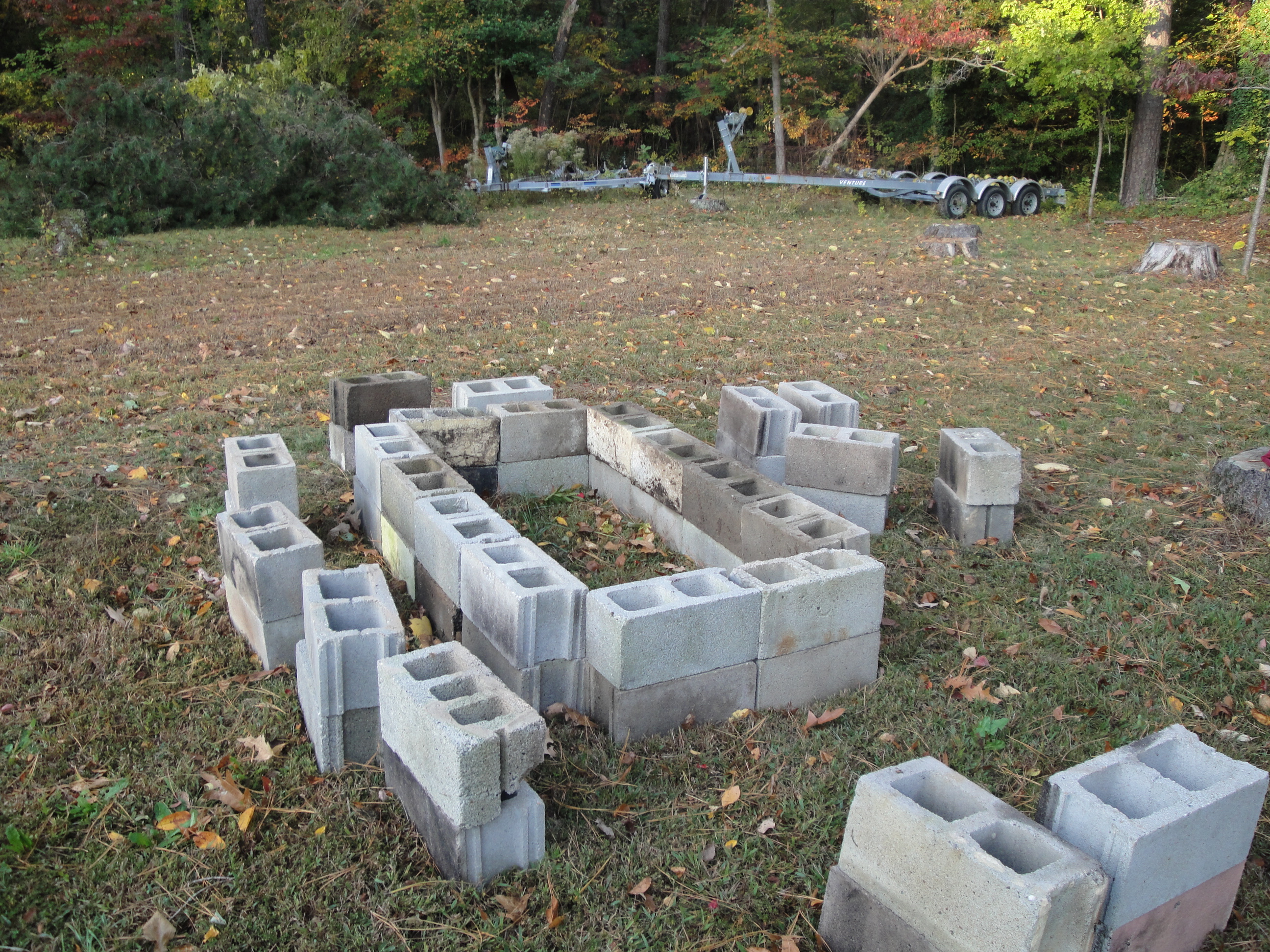
It is time to start building the pit. For our pit we use 48 cinderblocks. Lay them out in a box that is 2 blocks wide and 4 blocks long. Make sure that you choose a area that wont be ruined by burnt grass. We also make sure that our location has lots of space around the pit for people to play tailgating gamesthroughout the day. Your location will be the center of activity especially when people can start smelling the pig cooking.
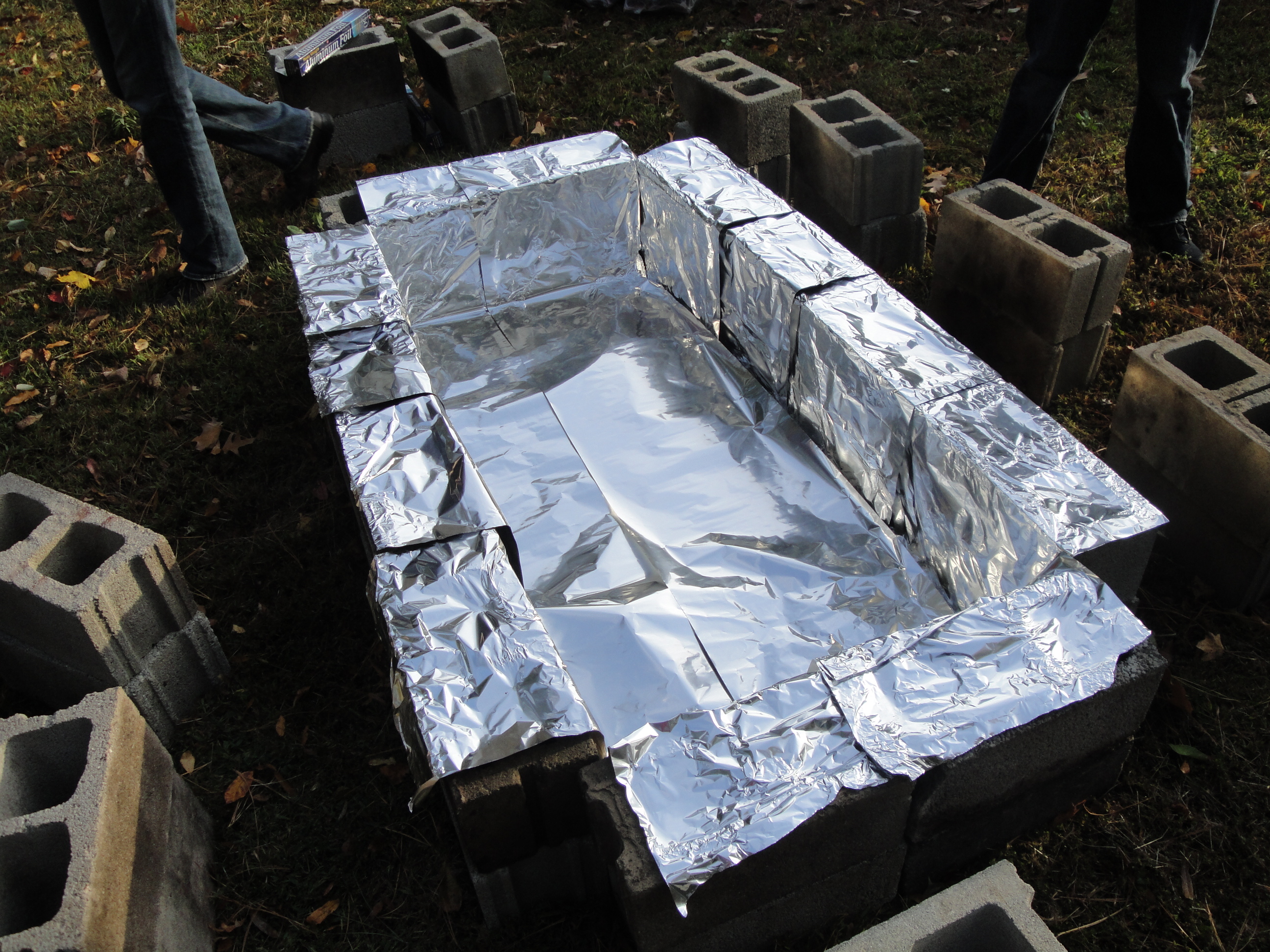
Stack another row of cinderblocks on your base layer so that your pit is 2 rows high. Take heavy duty aluminum foil and line the pit with it by running it from one edge of the pit, down the sides, accross the ground, and then back up the other side. This stops the flavor of the grass from getting into the pig as it cooks. This also makes cleanup easier the next day.
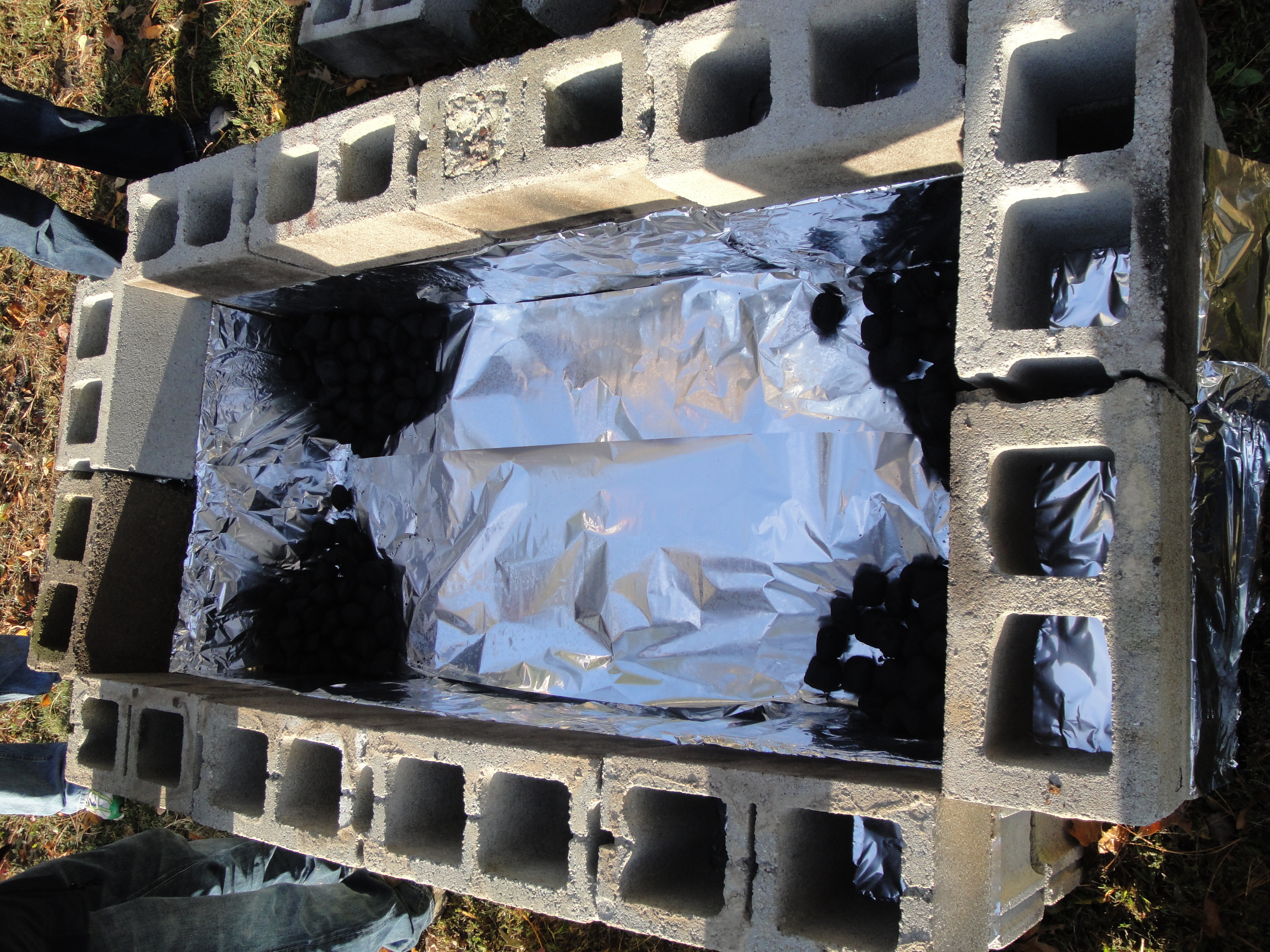
The best way to cook the pig is with indirect heat. Make 4 piles of coals in the corners of your pit. If you want to add wood for flavoring you would want to put it in now. Once the coals are placed, continue stacking the cinderblocks until you have 4 rows high. This will be the finished height of the pit. When you need to add coals during the cooking you would only take down 2 rows of end blocks to access the coals.
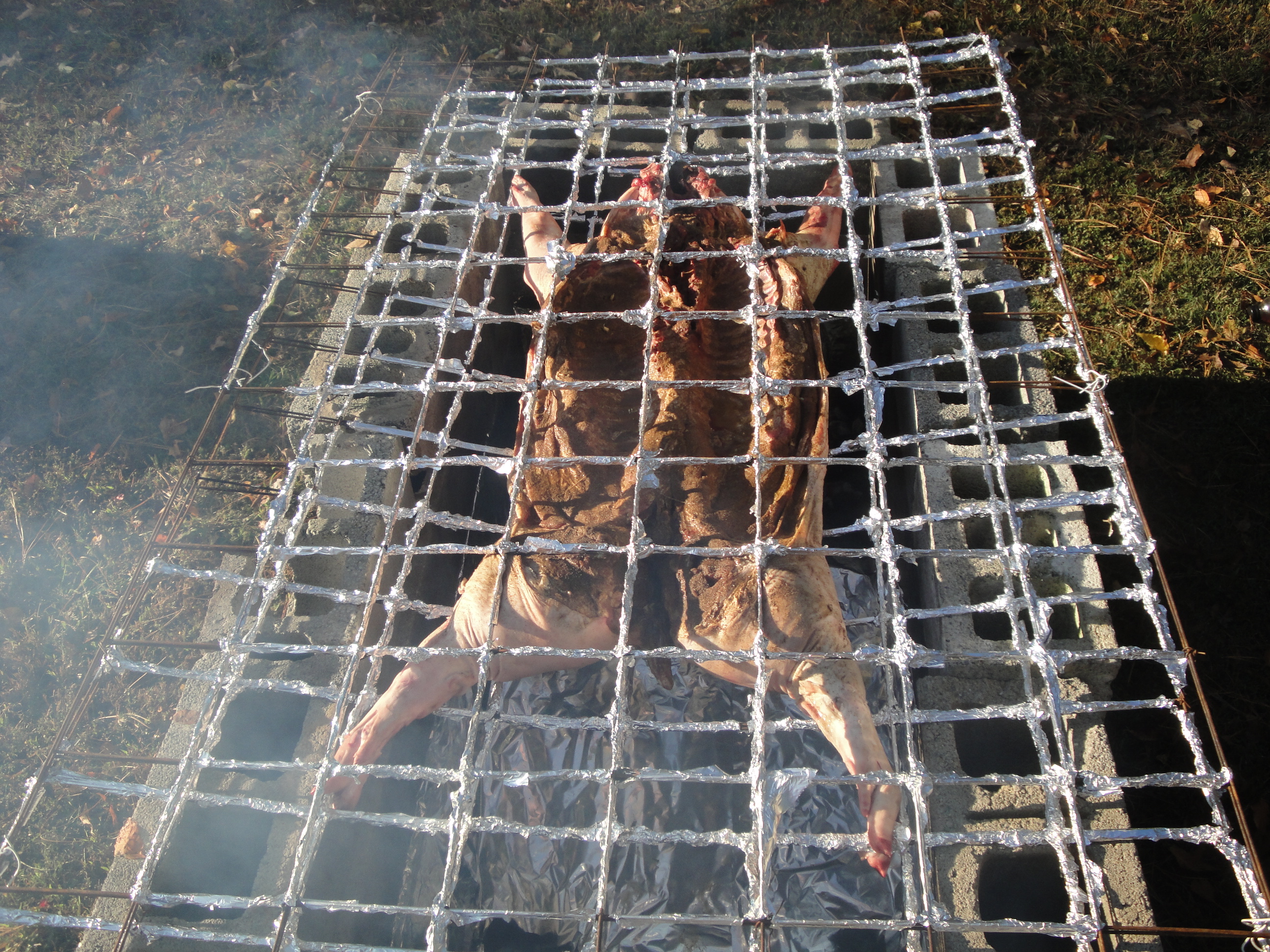
Now that the pit is complete, it is time to cook the pig. Place the pig skin side down between 2 metal grates. Tie these grates together at the ends making sure that the pig is secured inbetween the grates. This will allow you to flip the pig without it falling on the ground. Once the pig is secure, light the coals and place the grates over the pit skin side down.
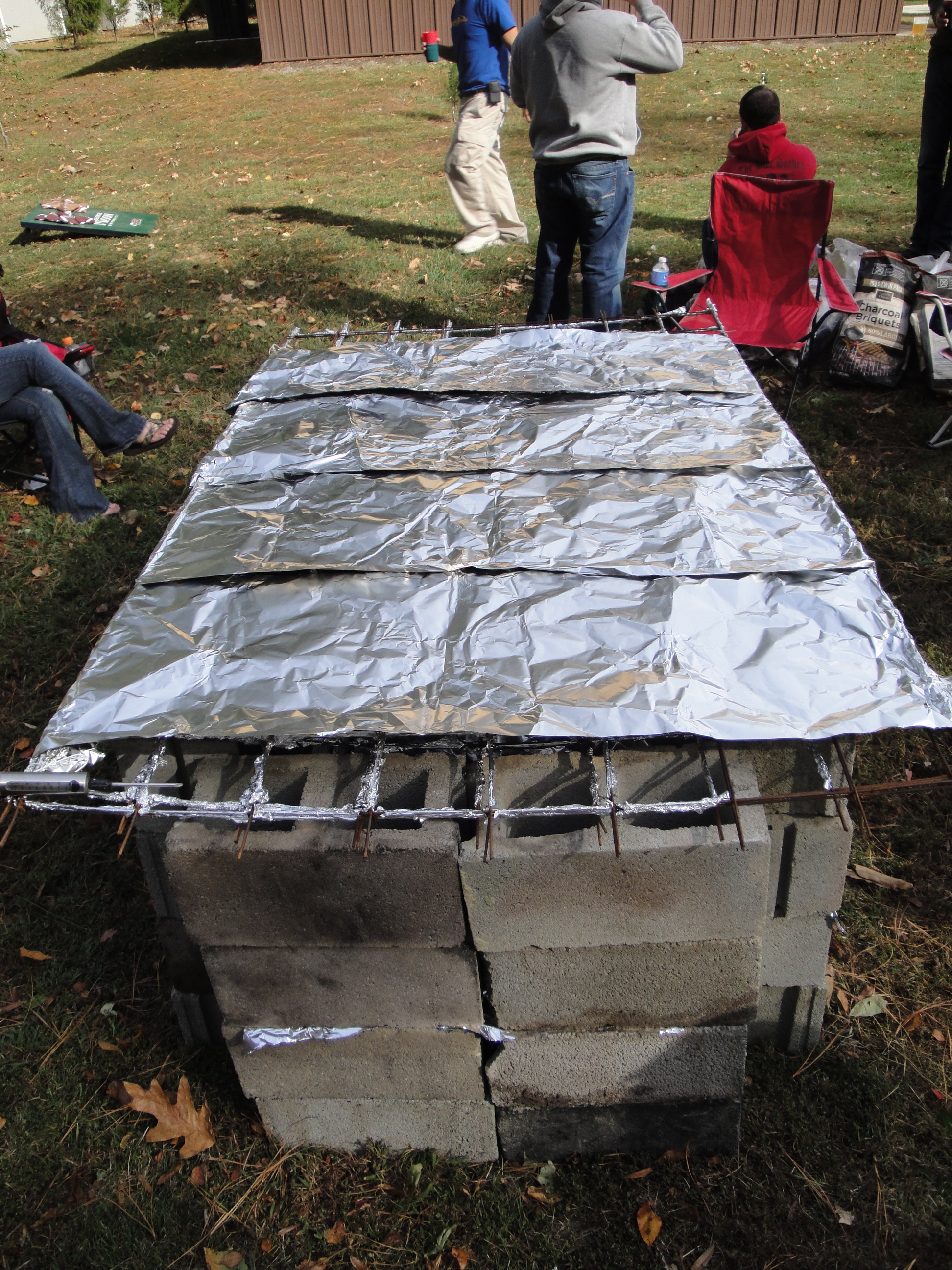
After about an hour the fire should be going nicely so you should cover the pig with aluminum foil. This will keep the heat inside the pit and allow the pig to cook without being picked at by your hungry guests. You should continue injecting the pig with your marinade periodically throughout the day. Try to keep flipping to a minimum so that the pig doesnt fall apart. We usually only flip 3-4 times. Cooking times vary based on outside temp, wind, size of the pig, etc. We keep ours on the pit anywhere from 6-8 hours for a 75 lb pig. Buy an inexpensive thermometer to make sure your pig is cooked all the way.